
Assumptions, results and research status
Exact topology and representation theory with conditional charge identification
Assumptions
- The phase group is a continuous compact circle with a declared normalization.
- Bundles and their transition maps are globally specified, not inferred from local curvature alone.
- Physical charge assignments use the stated determinant-linked carrier action and matter module.
Results
- Continuous circle characters have integer weights.
- A parallel product-volume tensor gives S(U(3)×U(2)) and a Z6 quotient condition on representations.
- The even exterior module inherits integral weights q=−2p+3r and hypercharges Y=q/6.
Open questions
- Which primitive rule selects the compact phase atlas and allowed topological sectors?
- Which matter representations and charge lattice are physically retained?
- How are charge normalization and coupling strength matched to measured observables?
Three different uses of an integer
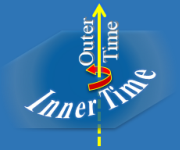
Temporal winding language can refer to several distinct mathematical objects. A phase path around a circle can have an integer winding number. A field can transform under a circle character with integer weight. A line bundle over a two-sphere can have an integer first Chern number. All three involve integers, but they classify different things: a map, a representation and a bundle.
| Integer | Object | Physical identification still needed |
|---|---|---|
| Winding | Closed map into U(1) | Which history or control path it represents |
| Weight q | Character eiθ↦eiqθ | Which matter field carries that representation |
| Chern number | Global line bundle and flux | Which gauge field and topological sector are physical |
The early gauge sketch identifies charge directly with a temporal winding count. The later sources retain the intuition while supplying the missing representation and bundle distinctions. A loop count alone does not select the particle spectrum, the electromagnetic coupling or a non-Abelian gauge group.
Source: Interactions Unification, §6.3, p. 10; compare gauge early §6.
Why circle characters have integer weights
A continuous one-dimensional unitary representation of U(1) lifts to a character of the real parameter θ. Additivity of the phase gives χ(θ)=eiqθ. Since θ and θ+2π represent the same group element, e2πiq=1, forcing q to be an integer.
The conclusion is relative to the chosen 2π-periodic circle. It does not guarantee that a field of weight one exists. A theory could contain only even weights, or several different representations, while using the same abstract circle. Its faithful action and allowed bundles require additional information.
Nor does integer q fix the coefficient in a covariant derivative. One may write D=d−igqB for a chosen connection normalization; the integer labels the representation and g sets the interaction strength. Rescaling conventions for the generator and field changes where numerical factors appear while leaving physical predictions unchanged. A coupling calculation must therefore state both conventions and the matter content.
Worked example: flux on a two-sphere
For a unitary line connection A=ia with real a, write F=if. On a sphere, a line bundle with Chern number n can be described using regular northern and southern potentials:
The potentials differ on the overlap by n dφ, which is removed by a circle transition function of winding n, with sign determined by the frame convention. Both give f=(n/2)sinθ dθ∧dφ. Integrating over the sphere gives ∫f=2πn, or equivalently (2πi)−1∫F=n.
This calculation connects local curvature to global patching. A single globally defined potential on a closed sphere would have zero integral by Stokes' theorem, so nonzero flux requires more than one chart. It also shows what topology quantizes: a flux sector in a declared line bundle. Interpreting that sector as magnetic charge and identifying which electric matter probes it are further physical steps.
A continuous circle is essential. A fixed finite phase group has locally constant transition maps and cannot supply a nonzero first Chern class over S².
Source: Sevenfold Gauge, §13.4, p. 31; explicit hemisphere calculation.
A seven-state recurrence is not the whole phase atlas
The regular seven-state source has a finite recurrence group, but its selected polar phase defines an ordinary continuous complex scalar algebra. These statements coexist: a finite clock can be represented on a complex space whose available scalar phases form U(1). The seven labels do not independently determine the bundle transition functions over a record manifold.
Local curvature also misses some global information. On a circle, a connection A=iα dφ has zero curvature because the base has no nonzero two-forms, yet forward transport has holonomy e−2πiα. This is gauge-trivial only when its period is an integer multiple of 2π in the relevant representation. A flat connection can therefore retain observable comparison data.
For the determinant-linked carriers, Tr F3+Tr F2=0 removes local total-determinant curvature but does not remove nontrivial flat periods. A globally retained parallel unit tensor in the product determinant line supplies the stronger condition: total determinant holonomy equals one around every loop.
Source: Sevenfold Gauge, Theorem 8.2, No-go theorem 8.5 and §13.4, pp. 22, 31.
The product-volume constraint and its global quotient
For Hermitian carriers E3 and E2, retaining neither block volume allows U(3)×U(2), with real dimension 13. Retaining their parallel product volume imposes det u3det u2=1, leaving dimension 12. Retaining the two volumes separately would give SU(3)×SU(2), with dimension 11. A retention rule thus changes the group.
The covering map sends (A,B,z) to (z−2A,z³B). Its kernel is generated by (e2πi/3I3,−I2,eiπ/3), whose sixth power is the identity. The local Lie algebra is su(3)⊕su(2)⊕u(1), but the quotient controls which representations and global gauge bundles fit together.
Let t3 be color triality, t2 weak center parity and q the integral circle weight. The kernel acts trivially precisely when q+2t3+3t2≡0 modulo 6. This congruence is a global compatibility test, not a unique matter-selection rule.
Source: Sevenfold Gauge, Corollary 8.3 and §22.2, pp. 22, 48–49.
Exterior composition calculates relative charges
A block-scalar circle with integral weights a and b preserves the product volume when 3a+2b=0. Its primitive nonzero solutions are (a,b)=(−2,3) and the overall sign reversal. Once that action is chosen, an exterior monomial with p triplet factors and r doublet factors has additive weight
For example, E3⊗E2 has q=1 and carries a quark-doublet candidate with Y=1/6. The color antitriplet Λ²E3 has q=−4 and Y=−2/3. The lepton-doublet candidate Λ³E3⊗E2 has q=−3 and Y=−1/2. The degree-zero sector is neutral.
Every exterior sector passes the quotient test automatically: t3=p modulo 3, t2=r modulo 2, and q+2p+3r=6r. The nontrivial physical input is the chosen exterior module and its inherited action. Other representations or extra character twists are not excluded by the gauge group alone.
Hypercharge becomes electric charge through the Higgs sector
Before electroweak symmetry breaking, the Abelian factor in the benchmark is hypercharge. Add a scalar Higgs doublet H in E2, with Y=1/2. If its nonzero vacuum lies in the weak component with T3=−1/2, the generator preserving that vacuum is Qem=T3+Y.
The quark doublet then has electric weights 2/3 and −1/3; the lepton doublet has 0 and −1. In all-left-handed notation the conjugate singlets uc, dc and ec carry −2/3, 1/3 and 1. Those signs follow from conjugation; they are not a second set of right-handed particles with unchanged charges.
The calculation assumes the scalar representation and breaking direction. It does not derive the Higgs potential, its vacuum scale or the photon coupling. The photon is a mixture of weak-neutral and hypercharge fields, so a proposed temporal U(1) must specify which stage of that construction it describes.
Source: Sevenfold Gauge, §22.7, pp. 51–52.
What a single phase sphere cannot encode
The two-state Berry carrier offers a useful line-bundle example, but a single endpoint map n:X→S² cannot represent every Abelian field in four dimensions. If f=n*ω is the pullback of a two-form on S², then f∧f=n*(ω∧ω)=0, because S² has no nonzero four-forms. General four-dimensional Abelian curvature need not satisfy that restriction.
More elaborate carrier spaces, nontrivial patching or independently retained transport can represent additional fields. Their topology must be checked explicitly. Winding language alone does not perform that extension, just as binary or triple winding does not select SU(2) or SU(3) without a carrier and retained tensors.
The symmetry explorer tests stabilizers and quotient weights; the anomaly explorer tests a separate quantum consistency condition. Agreement with both is useful, but a physical theory must also select the matter module, supply dynamics and determine how its normalization is measured.
Continue reading
Sources for this guide
Source manuscripts, version notes, and standard references are listed in the reference library.